


























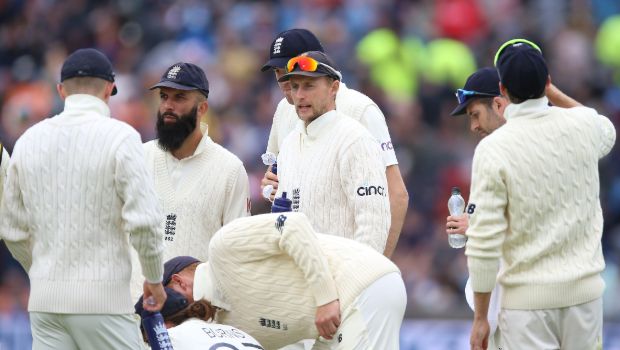
England’s campaign so far at the T20 World Cup 2025 has been underwhelming, and that is precisely why this upcoming contest vs Italy represents a pivotal moment. This is their opportunity to announce themselves to the tournament and reveal their true identity. They arrived brimming with confidence, yet their performances have not reflected that assurance. Only those within the dressing room can truly explain why that disconnect has occurred.
What is undeniable is that England possess the players, the resources, and the overall depth to perform at a far higher level than they have shown. If they are to progress, and most would expect them to win this game and advance to the Super 8s, then the timing could not be better for a statement performance. An A-plus display has eluded them thus far; delivering one now would reset the narrative around their campaign.
At the heart of England’s revival lies the top order. The key figures — Jos Buttler, Jofra Archer, and Harry Brook — must impose themselves. There were encouraging signs in the last outing. Archer, in particular, looked much improved. He struck early, picking up a couple of wickets, and that early incision is always a positive indicator. When Archer operates with rhythm and pace, he sets the tone for the entire bowling unit. His sharper performance suggests that England’s bowling attack may be finding its edge at the right time.
Another significant positive was Tom Banton’s innings. Not only did he contribute runs, but the manner in which he compiled them should serve as a confidence booster. A closer look at the context of his knock reveals something important: he was essentially operating in his preferred role. He came in to bat just after 2 overs after two quick wickets, Banton was effectively opening the batting. That familiarity appeared to free him. He looked comfortable, decisive, and clear in his approach.
This observation should prompt England to reconsider how they deploy him. Rather than adhering rigidly to a fixed batting order, they would benefit from greater flexibility. If they lose an early wicket inside the powerplay — especially one of their openers — sending Banton in immediately makes strategic sense. It allows him to play the role he understands best. On the other hand, if the openers negotiate the first six or seven overs successfully and build a platform, England then have the luxury of adapting. At that stage, they could assess whether they need Brook’s dynamism or Jacob Bethell’s left-hand option to manipulate match-ups. The key is adaptability rather than predictability.
This flexibility could unlock more consistent returns. Banton’s runs are a reminder that personnel must be aligned with role and timing. England should recognise that his effectiveness increases when he operates within the powerplay or close to it. A rigid structure may offer clarity, but in tournament cricket — especially in high-pressure qualification scenarios — adaptability can be the difference between stagnation and momentum.
Sam Curran’s importance to the side continues to grow. His mentality stands out. He relishes being involved in the decisive phases of a game. Whether with bat or ball, Curran wants responsibility when it matters most. His desire to contribute in key moments makes him a crucial component of this lineup. Having previously been player of the tournament in earlier editions, he understands what it takes to influence outcomes consistently. England will rely heavily on that competitive instinct as the stakes rise.
In terms of selection, the side appears to have settled on Jamie Overton. It would be surprising if they were now to revert to someone like Luke Wood. Overton has been doing a job — primarily with the ball — and while his batting contributions have been limited, that is not currently his primary role. Stability in selection at this stage can provide reassurance, particularly when the team is searching for rhythm.

However, beyond personnel, England must improve their reading of conditions. That may be the most critical lesson from recent performances. The reason Banton succeeded where others struggled was not merely technical execution but situational awareness. He recognised that the pitch offered extra bounce, making sweeping a risky option. Rather than forcing strokes square of the wicket, he played with a straight bat and targeted the ground down the line. That adjustment reflected an appreciation of the surface.
Others in the lineup — including Brook and Bethell — would have been aware of those same conditions. Yet the construction of their innings did not consistently reflect that understanding. There is much discussion about six-hitting power and boundary frequency determining this tournament. While aggressive intent is vital in T20 cricket, the teams that ultimately prevail are often those that read conditions astutely and adapt accordingly, both with bat and ball. Shot selection must align with surface behaviour. Banton’s innings was a template in that regard.
As for Italy, they will approach this contest buoyed by confidence. Their win over Nepal, achieved in emphatic fashion with a 10-wicket margin, marked their first World Cup victory. That milestone alone provides emotional momentum. The Mosca brothers – Justin and Anthony – were outstanding at the top of the order, setting up that triumph with authority. The Manenti brothers have also contributed significantly during the tournament. Performances like those build belief within a squad.
It is unfortunate for Italy that Wayne Madsen has not been available. His absence reduces their depth, though it remains to be seen whether his situation changes. Crishan Kalugamage has impressed with the ball, as has Ben Manenti, offering Italy competitive options. Still, their broader challenge lies in depth. Against a side with England’s resources, Italy will need four, five, perhaps six of their leading players to produce standout performances on the same day.
There is also the psychological dimension. Qualification for the Super 8s is on the line. Such stakes can create pressure, and pressure can distort decision-making. Italy will hope that England, aware of the expectations surrounding them, feel that weight. If Italy can sustain intensity and keep the game tight, doubt may creep into England’s minds. In tournament cricket, that mental battle can be as decisive as technical skill.
Realistically, England have too much quality. But potential must translate into execution. They need clarity at the top, flexibility in their batting order, sharper awareness of conditions, and their senior players to deliver. Archer’s improved rhythm, Banton’s composed innings, and Curran’s competitive mindset are positive indicators. If those elements align with smarter tactical decisions, England can
transform an underwhelming start into a campaign that gathers momentum at precisely the right time.