


























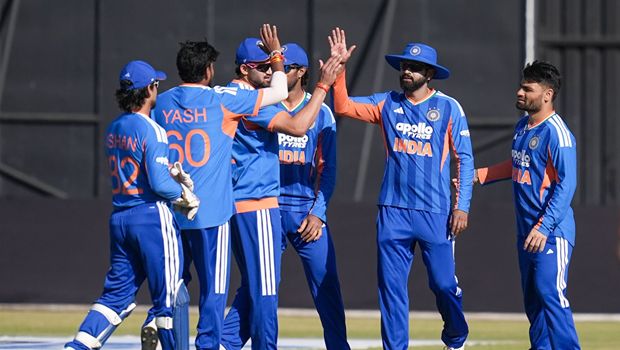
India did what they were expected to do in Zimbabwe, completing a comfortable 3-0 T20I series sweep. It was a welcome response after the disastrous tour of Ireland and England, but while the results were convincing, the series also offered some important clues about where this T20 side is heading.
Here are the biggest takeaways.
The first is that Shreyas Iyer is not going anywhere. After replacing World Cup-winning captain Suryakumar Yadav, Iyer became public enemy number one when India failed to win a single match in Ireland or England. But he steadied the ship in Zimbabwe, leading well enough while contributing with the bat.
Whether fans like it or not, the reality is becoming increasingly clear: Shreyas Iyer is India’s T20 captain, and barring something extraordinary, he is likely to remain in charge until 2028.
At the other end of the spectrum is Abhishek Sharma, whose place suddenly looks far less secure. Following an underwhelming tour of the UK, the left-hander managed just 11 runs in three innings against Zimbabwe. With Sanju Samson set to return for the Asian Games, Abhishek could find himself losing his opening berth, especially if the selectors decide to pair Samson with Vaibhav Sooryavanshi.
And speaking of Vaibhav, he looks like the real deal. After finding life difficult in England, the teenager appeared much more comfortable against Zimbabwe, scoring two half-centuries in three innings. There are technical flaws that stronger attacks will continue to expose, but the talent is undeniable. India simply have to persist with him.
Ishan Kishan also did enough to strengthen his case as India’s first-choice T20 wicketkeeper. Apart from one dropped catch that denied Ashok Sharma his maiden international wicket, Kishan kept tidily and batted with intent. Yes, his vulnerability outside off stump remains a concern, but he possesses the attacking game required to succeed overseas if he continues to work on those technical deficiencies.

Among the bowlers, Mayank Yadav’s fitness remains the biggest talking point. India possess very few fast bowlers capable of consistently touching 150 km/h, making him an asset worth protecting. Unfortunately, his career has already been interrupted by recurring injuries. Whether that means reducing his pace slightly or implementing a stricter workload-management programme, India must find a way to keep him on the park. His return in Zimbabwe was encouraging, but careful handling is now essential.
Another positive was Yash Thakur. He has often been expensive in the IPL, but his domestic record has always suggested he knows how to take wickets. Four wickets in two matches represent a promising start, even if he currently sits well down India’s pace-bowling pecking order. Given the injury concerns surrounding several established quicks, opportunities could come sooner than expected.
Not everything, however, was encouraging.
India still appear no closer to solving their seam-bowling all-rounder problem. With Hardik Pandya still unavailable and Nitish Reddy continuing his rehabilitation, the team looked at Shivam Dube and Suryansh Shedge in Zimbabwe. Neither looked convincing enough to suggest they are the long-term solution.
The other major disappointment was the fielding. Across all three matches, India were guilty of dropped catches and sloppy misfields. Kishan, Mayank, Abhishek Sharma, Tilak Varma and Yash Thakur all made errors in the field — a standard that simply isn’t acceptable for an international side.
The Asian Games squad has already been announced and, unless injuries force changes, it is unlikely to be altered. But if opportunity knocks, a handful of players from this Zimbabwe tour have certainly done enough to put themselves firmly on the selectors’ radar.