


























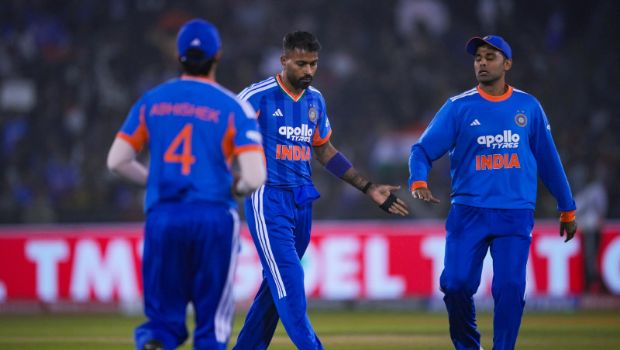
India may already be through to the Super 8, but that does not mean this game should be treated lightly. In fact, it may be one of the most important matches for them in terms of preparation. The key message is simple: beware of making too many changes. When a match has very little riding on it in terms of qualification, the natural temptation is to experiment: to try different combinations, look at fringe options, and explore possibilities that might be useful later in the tournament. That is understandable. But it needs to be handled carefully.
India’s first three games have shown promise, yet there are areas where improvement is needed. The team has played well enough to qualify, but they are not at their absolute best. That is precisely why this game should not turn into a trial run for multiple changes. Instead of rotating excessively, India would be better served using this opportunity to work on specific areas that require sharpening. One clear example is their approach to playing spin in the middle overs. That is something the frontline players need to get better at through time in the middle, not by watching from the sidelines while others are tested.
There will inevitably be discussion around Jasprit Bumrah. With nothing on the line in terms of progression, some may argue for resting him. The decision, however, should depend largely on Bumrah himself. If he feels he needs another game to fine-tune his rhythm, to work on certain aspects, or simply to build momentum, then he should play. On the other hand, if he feels in good rhythm and comfortable with where his game is, then this might be the right moment to give him a rest. Should he sit out, Mohammed Siraj would come in. That is a straightforward swap. Beyond that, though, there is no strong case for widespread alterations.
The Arshdeep Singh and Kuldeep Yadav discussion is another area where flexibility is possible. I admire both of these cricketers. Both of them have their own strengths. The choice between them may depend on conditions in Ahmedabad. It would not be surprising if Arshdeep returns for that game. At the same time, there is no need to make that change purely for the sake of it. Either option can work, and the broader structure of the team should remain intact.
One thing that seems clear is that there should be no thought of leaving out someone like Hardik Pandya. The core of the side needs to stay together. This match should be about reinforcing rhythm and confidence, not disrupting it. Too much tinkering risks losing focus on the bigger picture, which is being fully prepared for the Super 8.
Abhishek Sharma’s situation deserves particular attention. He has not scored a run in the tournament so far, and illness has not helped his cause. Opposition teams have adjusted their fields for him — deep extra cover, deep square — reflecting a more targeted approach. When that happens, there is always a danger of overthinking. If dismissals come in similar ways and field placements tighten, it can play on a batter’s mind.
This is not the time for that.
Abhishek is a fantastic ball striker. Midway through a World Cup is not the stage to start overhauling your method or dramatically changing your approach. Of course, there will be small learnings along the way — slight adjustments in shot selection or tempo — but the
foundation should remain the same. He must keep things simple, believe in his skills, and trust that what has worked in the past will work again.

Against an associate side still trying to find its best form, this is a valuable opportunity for him. That does not mean he needs to attack from the very first ball. In fact, quite the opposite. In a game like this, he can afford to give himself a little time, settle into the conditions, and then expand. What India do not want is a rushed start that results in a soft dismissal and no meaningful time at the crease. Spending time in the middle will be far more beneficial for both him and the team heading into tougher matches.
From the Netherlands’ perspective, there are positives to take. They started the tournament well and could easily have beaten Pakistan. They followed that with a win over Namibia before falling away somewhat in their loss to the USA. That recent defeat may have dented confidence slightly, but the opportunity to play India in a stadium like Ahmedabad is huge. It will be a terrific crowd and an unforgettable occasion for many of their players. The key for them will be not being overawed by the atmosphere.
Fielding has cost them at times, and that is one area where they will need improvement. Scott Edwards stands out as someone who needs to take a more assertive role with the bat, in terms of coming in earlier at times and being flexible. He is a very fine player, but he has not dictated terms enough in this competition. The opening pair of Michael Levitt and Max ODowd provide a decent start, while Colin Ackerman has struggled to impose himself. Bas de Leede remains one of their go-to players and an important presence.
With the ball, they have options. Paul van Meekeren’s fitness will be important, and Logan van Beek has been impressive. Aryan Dutt offers an interesting spin option, and there could be spin used up front against Abhishek and Ishan Kishan, assuming Kishan plays — which should be a certainty. Roelof van der Merwe in the middle overs adds further variety. They do have spin resources, and how they deploy them will be an intriguing aspect of the contest.
Ultimately, though, the focus of this game should remain firmly on India and what they can extract from it. The result matters less than the process. This is a chance to work on specific areas that will be crucial in the Super 8. There may be small tactical flexibilities — perhaps promoting Rinku up the order to prepare for a future scenario — and that is fine. But the
overarching principle should be restraint.
Do not tinker too much. Use the game to build rhythm, sharpen areas that need improvement, and reinforce the main thrust of the side. Continuity and clarity now will serve India far better than experimentation for its own sake.