

























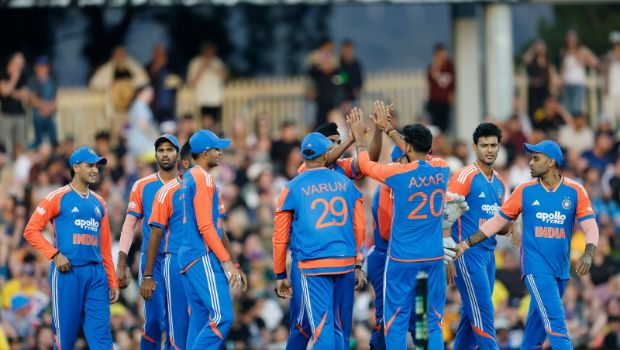
There are many takeaways that came out from the recently-concluded ODI series between India and New Zealand. The starting point has to be New Zealand’s performance, because it was nothing short of remarkable. To come into India with a depleted side and still manage to win the final two games in the manner they did is extraordinary. Doing so against a very strong Indian team, on Indian conditions, only amplifies the achievement. It is genuinely difficult not to be in awe of this New Zealand side. This was the first time they have won an ODI series in India, and that alone makes it a landmark moment. Unsurprisingly, Daryl Mitchell will take many of the plaudits, and rightly so, but this was also a collective triumph that reflected the character of the team as a whole.
New Zealand are often spoken about in a particular way. People regularly suggest that they may not always possess the star quality players that other sides have at major tournaments, yet they continue to perform, adapt, and compete at the highest level. They are a team that commands admiration, not because of flamboyance, but because of clarity, discipline, and intelligence in how they play the game. This series only reinforced that reputation.
From India’s perspective, there are two ways of looking at this series defeat. One approach would be to see it as a cause for real concern — losing an ODI series at home to New Zealand for the first time. The other, and arguably the healthier approach, is to view it as part of a longer journey towards building something special for the next World Cup. That second lens is the one India need to adopt. Panic would be the easiest reaction, but it would not be the right one.
When a series is lost in this manner, the immediate temptation is to question selection. It becomes about who should have played, who should not have played, or whether the balance of the side was wrong. That line of thinking is understandable, but it is not always productive. A more constructive approach is to assess how individual players are performing and whether they remain the best options moving forward. In that context, India still have, broadly speaking, their best players in place.
Looking at the batting line-up, there is little reason to advocate for dramatic change in ODI cricket. At the top, Rohit Sharma and Shubman Gill remain the natural choices. At number three, Virat Kohli continues to be the anchor and the heartbeat of the side. At four, sticking with Shreyas Iyer makes sense. At five, KL Rahul fits the structure, followed by Hardik Pandya at six when fully fit. Beyond that, the bowlers complete the XI. There is no compelling case for major upheaval, and it would be unwise to force change for the sake of reaction.
There will, however, be some pressure on Ravindra Jadeja. He did not have a strong series, and that is undeniable. That said, he has been around long enough to understand the demands of the game at this level. Rather than replacement, this may be an opportunity for evolution — perhaps adding a bit more variation or subtlety to his bowling.
The most interesting discussion point emerging from the series, for me, is Nitish Kumar Reddy. This is where the idea of investment becomes crucial. The question India must ask themselves is whether they are willing to commit to him now and allow him the time and confidence to grow into a genuine batting option at six or seven. With Hardik Pandya in the side, that balance becomes easier, but Hardik is not always available. India need someone who can fill that role consistently. The instinct here is clear: they need to invest in Nitish Reddy, give him games,
give him overs, and allow him to develop into an all-rounder within the system. Not the all rounder — that role still belongs to Hardik — but an all-rounder who adds depth and balance.

There is also no justification for panic regarding Kuldeep Yadav. He had a poor series, but that is a rarity rather than a trend. Replacing him would not be a sensible response. Every player has an off series, and Kuldeep remains a key component of India’s bowling attack.
One area where consistency of selection becomes important is Arshdeep Singh. I was surprised at how little game time he got in the series. He needs tp play thr 50-over cricket more and more. Looking ahead to a full-strength World Cup attack, the combination is compelling: Jasprit Bumrah for pace and venom, Arshdeep for left-arm variation, possibly Mohammed Siraj or another pace option, Kuldeep as the wrist-spinner, and a left-arm spinner such as Axar Patel, with Washington Sundar providing off-spin when fit. On paper, that attack has everything a captain could ask for in terms of variety and balance.
Where India do need to reflect is their batting tempo, particularly in the second game. At times, it was simply too pedestrian. Modern ODI cricket does not allow for prolonged stagnation, even on challenging surfaces. That phase of the series could well prove pivotal when they look back. While conditions were not easy, there was room to be more proactive and assertive.
Context also matters. ODI cricket is no longer played in abundance. Bilateral series are fewer, which means every opportunity becomes more significant. When chances arise, teams must make the most of them. New Zealand did this better than India by consistently addressing key moments and managing match situations more effectively.
That is where Daryl Mitchell’s influence stood out. He reads game situations as well as anyone in world cricket, which explains why he remains so highly rated. His understanding, humility, and composure make him exactly the kind of player you want at the crease when a match hangs in the balance. Alongside him, Glenn Phillips also deserves immense credit. Together, they built intelligently, kept the scoreboard moving against quality spin, and then accelerated decisively at the end. They read the conditions better than India did.
Phillips, in particular, continues to feel underutilised in many sides. He has the ability to dictate terms in an innings, not just finish one. This series felt like an opportunity taken, and for New Zealand, it should serve as encouragement to give him more responsibility moving forward.
Finally, there is Virat Kohli. Watching him bat, especially in chases, remains a privilege. Even though this series did not fully go his way, his form and appetite speak volumes. Having stepped away from other formats, his hunger for ODI cricket is unmistakable. Alongside him, Rohit Sharma, despite a quieter series, remains deeply invested. The presence of two icon players who still burn with the desire to improve and contribute bodes extremely well for India’s future.