


























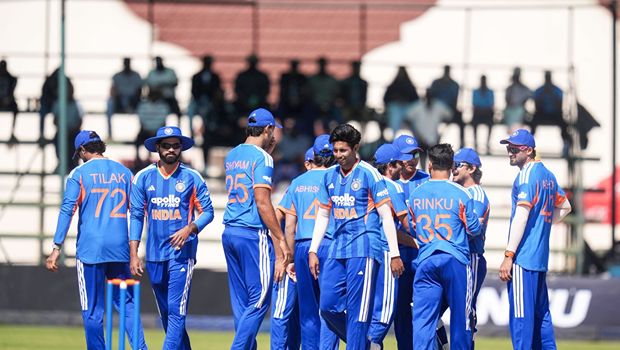
India’s recent cricket schedule has been dominated by overseas tours, and that, in itself, has been fascinating. When you look at Indian cricket and the way the system works, Indian players are largely expected to remain available for cricket within India. If a player wants to represent the Indian team, they have to participate in the IPL and are not allowed to feature in other franchise leagues around the world. It creates a unique structure, one that can be compared to rugby in New Zealand.
The comparison is similar to how rugby operates in New Zealand, where players who aspire to wear the iconic All Blacks jersey are expected to play in the Super Rugby competition and remain available for New Zealand rugby. They are generally not encouraged to play outside the country if they wish to be selected for the national team. Occasionally, some players have been granted sabbaticals to play in countries like Japan or France, but those opportunities have been brief, usually during the off-season. Even then, concerns have remained over injuries and the challenges that come with allowing players to spend extended periods overseas.
With India, however, there is a positive aspect to seeking foreign experience. Looking at the current Indian setup, several experienced players have moved on in recent times, opening the door for a new generation and fresh leadership. There is an abundance of talent coming through, much of it nurtured in the IPL. However, the crucial point is that the IPL is played in Indian conditions. Those conditions are vastly different from what players encounter in countries such as England, Australia, New Zealand or South Africa.
That is where the biggest challenge lies for Indian cricketers. Overseas, they have to deal with the moving ball, often accompanied by extra bounce. These are conditions that are entirely different from what they experience at home. It is one of the reasons why touring overseas remains such a valuable learning experience for the Indian side.
The series in England underlined that challenge. It went against the grain as India lost the T20I series 4-0 before England also won the ODI contests. India were up against an England side packed with quality players. The batting lineup featured names such as Phil Salt, Jos Buttler, Harry Brook, Jacob Bethell, Tom Banton and Sam Curran. Their bowling attack, too, looked balanced and dangerous, with Jofra Archer, Josh Tongue and Will Jacks all making valuable contributions. Will Jacks, in particular, appears to have benefited from his IPL experience, with his confidence clearly growing. Alongside them, the experienced Adil Rashid continued to provide balance to England’s attack.
England, playing at home in familiar conditions, were always going to pose a formidable challenge. Given that India also wanted to give opportunities to several younger players and expose them to overseas conditions, the series became as much about learning as it was about winning.
One of the biggest talking points was the Vaibhav Sooryavanshi factor. As a teenager, still only 15 years old, he has generated enormous excitement with the dynamic style of cricket he brings. His talent is extraordinary, and naturally expectations around him are already very high.
However, having experienced players around him will be important for his development. Players such as Abhishek Sharma, Ishan Kishan and others can help him maintain the right mindset, guiding him through both the highs and the inevitable lows of international cricket. There will be difficult days, perhaps more often than good ones, because that is the nature of top-level sport. At the moment, though, his talent is so exceptional that people simply expect him to succeed every time he walks onto the field.
The tour also highlighted another important aspect of international cricket. While facilities and playing surfaces are generally of a high standard, climatic conditions in England, the United Kingdom and Ireland are vastly different from those in India. Adapting to those environments involves a steep learning curve. Yet it is a valuable one because many Indian players may have previously played club cricket or the occasional stint of county cricket in the UK, but stepping into international cricket is an entirely different experience. The expectations, pressure and intensity are on another level.
That is why there were still positives for India despite the defeats. The players gained exposure to foreign conditions and experienced what it takes to compete against one of the strongest teams in the world on their home turf.

The challenges Indian batters face in England are nothing new either. It was not long ago that Virat Kohli endured a difficult Test series in England in 2014, struggling for runs. England has traditionally been a tough place not just for Kohli but also for Rohit Sharma and other naturally aggressive stroke-makers. Even the great Sachin Tendulkar never managed to score a Test century at Lord’s, an extraordinary statistic considering his remarkable career. That only illustrates how demanding England can be as a cricket destination, with the pressure of playing against England in their own backyard adding another layer of difficulty.
Following the demanding England tour, India then travelled to Zimbabwe, presenting an entirely different challenge. Instead of facing one of the world’s leading teams, they came up against comparatively easier opposition. For Sooryavanshi, Zimbabwe was familiar territory after having recently played in the ICC Under-19 World Cup there. During that tournament, he dominated the competition, looking almost like a man playing against boys as he piled on runs.
That experience forms another important stage in his development. Every opportunity to play in different conditions and against varying standards of opposition contributes to his growth as a cricketer. Looking at his overall ability and what he brings to the table, there is every reason to be excited about his future.
The Zimbabwe tour also proved significant for captain Shreyas Iyer. He needed a series victory, confidence and momentum, and this tour provided exactly that. A successful series under his leadership was an important step forward.
Among the bowlers, Mayank Yadav generated particular excitement. Known for regularly bowling at speeds exceeding 150 kmph, he represents a rare commodity in world cricket. For India, it is essential to manage him carefully. While injuries remain a concern for any
fast bowler, someone capable of consistently bowling in the mid-150s possesses a genuine X-factor that can transform matches.
Players with express pace are unique, and international cricket always benefits from having bowlers who can produce moments of brilliance. Jofra Archer is an example of the difference such bowlers can make for England. They have the ability to influence crucial moments and become genuine match-winners in the biggest contests. That is why protecting and developing someone like Mayank remains so important.
Overall, there are plenty of positives for India to take from this phase of international cricket.
Looking ahead, these tours could prove highly beneficial as India build towards the ICC 50- over World Cup at the end of 2027, which will be hosted across Zimbabwe, Namibia and South Africa. The exposure gained by this wider pool of Indian talent in overseas conditions should serve the team well, providing players with valuable experience in environments that they are likely to encounter again during one of the biggest tournaments in world cricket.