


























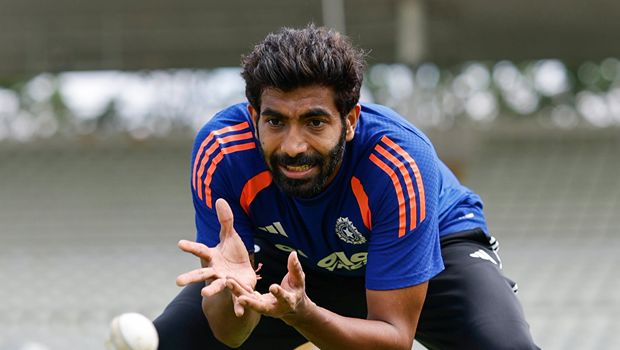
Every time Jasprit Bumrah breaks down, the same debate returns: is India asking too much of its greatest fast bowler?
His latest injury setback has once again highlighted a worrying trend. Since the start of 2025, Bumrah has missed 10 international series due to a combination of fitness issues and workload management. That list includes the Champions Trophy, underlining just how carefully India have had to manage one of the most valuable cricketers in world cricket.
It is difficult to argue against the concept of workload management. Bumrah is unlike almost any other fast bowler in the game. His unique action, which involves significant hyperextension of the bowling arm, places extraordinary stress on his body. Couple that with the relentless international calendar and India’s dependence on him across all three formats, and careful planning becomes a necessity rather than a luxury.
The problem, however, appears to be bigger than Bumrah himself.
No amount of individual workload management can completely overcome a schedule that demands year-round cricket. Every time Bumrah is rested, India become noticeably weaker. Every time he returns, there is the constant fear of another breakdown. It has become a cycle that neither the selectors nor the medical staff seem able to escape.
That raises an uncomfortable question. Should India now begin thinking beyond workload management and instead move towards format management?

With India’s chances of reaching the current World Test Championship final appearing slim, it may be worth considering whether Bumrah’s long-term future lies primarily in white-ball cricket. The 2027 ODI World Cup is one of the biggest events on India’s horizon. That will be followed by another T20 World Cup and cricket’s return to the Olympics in Los Angeles in 2028.
Those tournaments represent enormous opportunities for Indian cricket. A fully fit Bumrah could be the difference between winning and falling short on the biggest stages.
This is not an argument against Test cricket or against Bumrah’s desire to play the longest format. Few bowlers have embodied the spirit of Test cricket as brilliantly as he has. But elite sport often demands difficult decisions, and India’s greatest challenge may no longer be managing Bumrah’s workload—it may be deciding where his value is greatest.
For the BCCI, the selectors and the team management, that conversation may have to begin sooner rather than later. The question is no longer whether Bumrah needs protecting. The question is whether protecting him now means sacrificing one format to maximise his impact in the others.