


























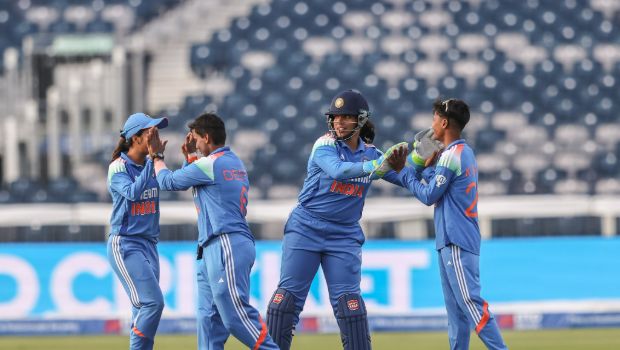
India’s recent ODI World Cup win has given the Women’s Premier League a renewed sense of purpose. The tournament now carries greater meaning, heightened interest and far more exposure, creating stronger opportunities for the development of Indian talent. With the fourth edition approaching, there is a clear feeling of optimism. The league continues to be strengthened by the presence of many of the world’s best players, and with matches spread across two venues, it promises to be an engaging competition.
With the World T20 scheduled to be played in the United Kingdom, this edition of the WPL also serves as an important preparatory phase. While the shift to two venues is not expected to significantly alter the structure or competitiveness of the tournament, there has been some
late disruption. The recent withdrawals of players such as Ellyse Perry and Annabel Sutherland have forced a few teams to restructure at short notice, which is far from ideal. Despite this, the auction this year featured more Indian talent than ever before, highlighting the growing depth of the domestic pool.
There is a strong emphasis on developing young Indian players, something that has been echoed by coaches and team managements. The role of overseas players remains crucial, particularly for established sides, but the long-term focus clearly lies on nurturing local talent. This balance mirrors the approach seen in the IPL, where franchises are expected to prioritise the growth of domestic players alongside international stars.
Leadership remains an interesting talking point this season, with three Indian captains and two Australian captains across the teams. While this is understandable in only the fourth edition of the league, there is hope that in the coming years all franchises will be led by Indian players. For now, having experienced international leaders guiding developing squads is a positive step, with the expectation that India’s leadership depth will continue to grow.
Mumbai Indians enter the season as defending champions and are once again expected to be among the strongest sides. With a proven coaching setup and a core group of leaders with exceptional records, they look well balanced. Lisa Keightley takes over as head coach, while Nat Sciver-Brunt and Harmanpreet Kaur bring an exceptional and proven record of leadership.
Their overseas players continue to play an influential role, and Hayley Matthews stands out as a player of extraordinary natural talent. Not judging purely on numbers or match-winning moments, her all-round ability and skill set make her one of the most gifted players in the women’s game. Mumbai Indians are widely seen as a difficult team to beat and I feel they are going to finish comfortably in the top three.
UP Warriorz are also tipped to be strong contenders. With experienced leadership and a squad packed with competitive players, they appear capable of putting together a consistent campaign. Meg Lanning has moved to UP from Delhi and this is a huge boost for them. I am excited to watch how Kiran Navgire and Kranti Gaud go this season. Deepti Sharma remains one of the fiercest competitors in the game and is the kind of player any side would want. Not to forget, they are supported by a mix of Indian and overseas talent including Sophie Ecclestone, Phoebe Litchfield and Harleen Deol. The team looks well equipped to challenge for a top-three finish if things fall into place.
I feel Delhi Capitals could also be right in the mix. They have been there or thereabouts in the previous editions, and this season feels no different. Jemimah Rodrigues will be captaining the side, and I am a big fan of her leadership. While she has captained before, when you watch her play for India she is effectively in charge on the field, setting placements, reading conditions and understanding ground dimensions extremely well. She knows her players and consistently puts them in the right positions, so it would be no surprise if she does a very good job as captain.

The squad is well balanced, with Shafali Verma alongside a strong South African contingent in Marizanne Kapp, Laura Wolvaardt and Chloe Tryon, while Shree Charani is another player who stands out. Sneh Rana further strengthens the Indian core. With this mix of quality Indian talent complementing experienced overseas players, I expect Capitals to finish in the top three. That is how I see the leading group shaping up, although there are still a couple of other sides capable of challenging.
Gujarat Giants also appear to have quite a lot going for them. Ash Gardner is an outstanding cricketer and will be leading the side once again this year, with Beth Mooney providing further quality and experience. The team has a strong group of Indian bowlers and all rounders, which stands out as a real strength. Kashvee Gautam is a player to watch, with the ability to contribute with both bat and ball, while Renuka Singh Thakur and Titas Sadhu add further depth to the Indian contingent.
This strong domestic core gives the Giants flexibility to fine-tune their combination of batting all-rounders and specialist batters, particularly among their overseas players. With several options available, including Dani Wyatt-Hodge and Sophie Devine, the team will need to adjust their balance carefully, with Mooney and Gardner almost certain starters. Getting that balance right could make Gujarat Giants a very competitive side this season.
Royal Challengers Bangalore, however, face a tougher challenge this season. The late withdrawal of Perry is a significant blow, given her influence and experience. While the team still has quality within the squad, adjusting to such a major absence so close to the tournament could prove difficult and may impact their overall prospects.
Smriti Mandhana is one of the best players to have played the game, and she is likely to open the innings alongside Georgia Voll. Grace Harris is another player in excellent form; having seen her perform first-hand in the UK, she looks in very good touch. Nadine de Klerk is also an exciting prospect and adds further depth to the side.
In the bowling department, the inclusion of Radha Yadav significantly strengthens the spin options, while Arundhati Reddy adds balance to the attack. Together, they form a solid and well-rounded bowling unit, which is a positive sign for the team. If they can start the tournament well and build confidence, they could gain strong momentum. Mandhana, in particular, will be a key player with the bat, and much will depend on how she performs over the course of the tournament.
Overall, the fourth edition of the Women’s Premier League arrives at a time of growing confidence in Indian women’s cricket. With increased talent, strong international presence and a clear focus on development, the league continues to move in a positive direction, promising competitive cricket and valuable opportunities for players at all levels.