
























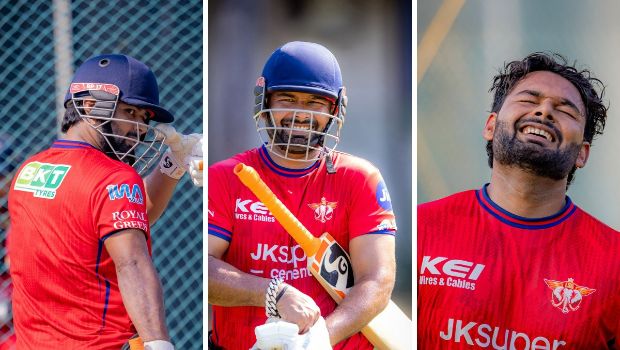
There’s pressure, and then there’s Rishabh Pant-level pressure heading into IPL 2026.
At ₹27 crore, Pant isn’t just the most expensive player in the league—he’s also the face and captain of Lucknow Super Giants, a franchise desperate to course-correct after a disappointing seventh-place finish last season. And Pant’s own returns didn’t help: 262 runs in 13 innings, with nearly half of those coming in a single knock, painted the picture of a campaign that never quite got going. Add to that repeated slow over-rate offences, and it was a season to forget on both personal and leadership fronts.
Which is why IPL 2026 feels less like another season, and more like a referendum.
Because beyond franchise fortunes, Pant is now battling a far more complex narrative – his place in India’s white-ball ecosystem. Once seen as the future across formats, Pant currently finds himself on the outside looking in. He hasn’t featured in a T20I since mid-2024, nor in an ODI since that same tour of Sri Lanka. Even at the Champions Trophy, he remained a spectator.
The competition has surged ahead. KL Rahul continues to be India’s preferred wicketkeeper in ODIs, thanks to his measured, low-risk approach. In T20Is, the selectors have widened the net—Sanju Samson, Ishan Kishan, Jitesh Sharma, and Dhruv Jurel have all been preferred options at various points.
And now, after Samson and Kishan played pivotal roles in India’s T20 World Cup triumph, the pecking order appears even more firmly established. Pant, for perhaps the first time in his career, is chasing the game.
Which raises the bigger question: what is Pant playing for in IPL 2026?
Is this about reclaiming a T20I spot? Building a case for the 2027 ODI World Cup? Or simply reasserting himself as a white-ball force too compelling to ignore?
The answer may not come in words—but it will certainly come in runs.

Because the path back is brutally simple: overwhelm the selectors. A middling season won’t cut it. Pant needs volume, consistency, and impact. He needs to dominate games, not drift through them.
That also brings into focus a tactical decision for LSG. Where does Pant bat? At No. 4, where he has often operated? Or does he move up to No. 3 to maximise time at the crease and dictate tempo? Given LSG’s need for stability and firepower, promoting Pant could be both a personal and strategic masterstroke.
Encouragingly, there are signs of intent. Training clips of Pant working closely with Yuvraj Singh in the lead-up to the season hint at a player who understands the stakes—and is preparing accordingly.
In ODIs, the door isn’t fully shut. Rahul may be first-choice, but strong IPL performances from Samson or Kishan could complicate the hierarchy further. Pant knows this. He also knows that standing still is not an option.
Interestingly, it is in Tests where Pant’s position remains most secure. He continues to be a rare, match-altering presence in the middle order—arguably on track to become India’s greatest wicketkeeper-batter in the format.
But white-ball cricket? That’s a different story.
IPL 2026, then, is not just another tournament for Pant. It is a proving ground. A second act. A chance to remind everyone—selectors included—that class, once proven, doesn’t disappear. All eyes, inevitably, are on the 28-year-old. And if history is any guide, writing him off has rarely ended well.