


























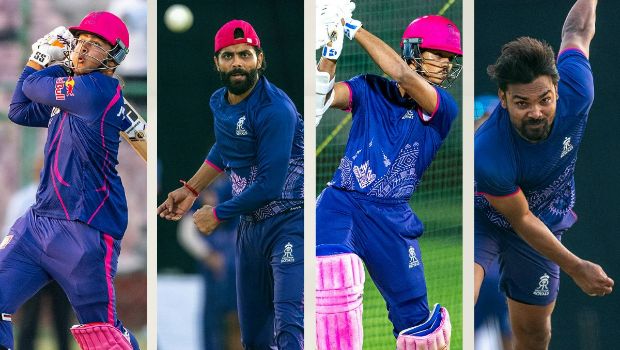
Rajasthan got off to a very strong start in the competition, and although they experienced a slight slowdown, their recent win against Punjab, particularly the successful run chase, has significantly altered the perception of their trajectory over the next couple of weeks.
Had they lost that match, it might have reinforced a familiar pattern often associated with Rajasthan: beginning strongly but gradually running out of momentum. However, that victory has shifted that narrative, and there is no longer the same concern about them fading away.
That win against Punjab now appears to be a crucial turning point in their campaign. It has strengthened their chances of progressing to the latter stages of the tournament and could prove to be a defining moment. Looking back over the past few years, there is also a sense that Rajasthan may have been overthinking aspects of their game. Their approach seemed heavily driven by data, analytics, and match-ups. This year, however, there is a noticeable
difference. Watching them now, there is a stronger sense that they are adapting better to the natural ebb and flow of matches. Their decision-making appears more stable and instinctive, which is a positive development.
At the same time, there are still areas of concern. The captain, in particular, is under pressure, as he is not performing at the level he would expect of himself. That remains an issue for the team. However, their batting at the top of the order is as strong as one could hope for. Yashasvi Jaiswal has taken on a significant role, appearing almost like a senior professional despite still being a young player learning his game. His handling of Vaibhav Sooryavanshi has been especially noteworthy. He has allowed his junior partner the freedom to play his natural game, which is remarkable considering Sooryavanshi’s ability at such a young age.
Sooryavanshi’s six-hitting ability and his capacity to take control of a game very early on are extraordinary and not something commonly seen. This adds a dynamic edge to Rajasthan’s batting lineup.
As for their bowling, it remains in reasonably good shape, although it was stronger at the start of the tournament than it is now. Jofra Archer has been exceptional throughout, consistently bowling with pace and accuracy. One particularly striking aspect of his performance has been his approach to crease. He appears to be running in with greater aggression and intent than ever before. Whether this has directly influenced his rhythm and pace is unclear, but visually, it is very impressive.
Nandre Burger started well but has seen a slight decline in form. This means Rajasthan will need to be careful in how they manage their bowling resources. Ravi Bishnoi has followed a similar pattern: beginning strongly but tapering off somewhat. This makes the management
of their bowling lineup even more important moving forward. In this context, Jadeja appears to have been underused, though the reasons for this are not entirely clear.
This underutilisation of both Jadeja and Bishnoi may be linked to an over-reliance on match-ups and analytics, such as the idea that left-arm bowlers should not bowl to left handed batters. However, this approach can sometimes be overdone. Players like Jadeja and Bishnoi, both of whom are international-quality bowlers, possess the skill to perform effectively in any situation. They should not necessarily be held back for specific match ups but instead be trusted to influence any phase of the game. Therefore, it seems important that Jadeja is used more with the ball.

Delhi Capitals front-line and opening bowlers have struggled, which has been a key issue. Mitchell Starc’s potential availability is a significant factor. If he is fit to play, it would provide a major boost, especially considering that Lungi Ngidi is currently unavailable for another game or so, despite having been outstanding.
Mukesh Kumar has struggled, and Kyle Jameison also found it difficult in the last match. It is likely that Starc will replace Jamieson, which could strengthen the bowling attack.
On the batting side, KL Rahul has been a pleasure to watch. I believe that he should open the batting whenever possible, regardless of format. Recently, it appears he has made a few adjustments to his technique — opening up his stance slightly, positioning himself more towards the leg side, and allowing the bat to come through more freely. This has helped him score more fluently, find boundaries, and play with greater dominance in the early overs.
Importantly, his approach is not reckless or unrefined. It is grounded in solid batting technique, which makes his aggression effective rather than risky. Nitish Rana has also contributed well, while the team continues to rely heavily on David Miller and Tristan Stubbs in the middle order. The key question for them is whether they can consistently get going and build momentum.
At the top of the order, combinations have not always worked as planned. Pathum Nissanka and Rahul have opened together, but that pairing has not fully delivered, with Nissanka often getting starts without converting them. Sahil Parakh was introduced in the last game, and while he has a strong yorker, it is difficult to assess him based on just one
match. The team is likely to persist with their current setup in an effort to establish a stable and effective opening combination. This remains an area of concern, but the more pressing issue is resolving the opening bowling slot, something that Starc’s return could help address.
Overall, Royals appear well-positioned as favourites, particularly after their timely win against Punjab. This stage of the tournament — around eight to ten games — is critical. The initial excitement and strong starts begin to fade, and teams can easily lose momentum if they are not careful. A few losses in this phase can derail a campaign and make it difficult to recover in time for the final push towards the playoffs.
In this context, Rajasthan’s victory against Punjab could prove pivotal. It has provided them with a lift at exactly the right time, helping them maintain momentum and setting them up to finish the group stage strongly.