


























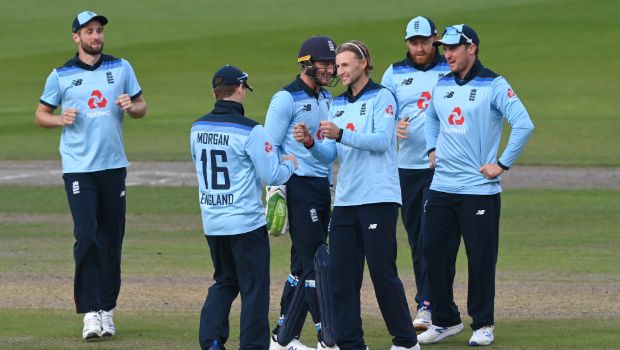
I think England’s player management setup deserves huge congratulations after the series win over Sri Lanka. Coming back from 1–0 down to win the next two games in the manner they did is a terrific achievement. It has been a difficult winter for England. Many of the same players struggled in the Ashes, and there have been off-field issues as well. This was a team under pressure, from top to bottom, and they responded extremely well. They deserve a lot of credit.
Sri Lanka are a very strong side at home and had been unbeaten there for quite a number of years in ODIs, which makes this achievement even more impressive. So, well done to the England players and the management for turning things around. There is a slight feeling that this success is on hold because there is so much to look forward to in the next month or so, but that should actually galvanise this group. The squad will not change much—there may be one or two changes—but largely the same players will feature, and this series should give them great confidence.
One thing that is easy to overlook when reviewing the series is England’s ability to understand match situations and conditions, which is a recurring theme in ODI cricket. England did this well, and Joe Root did it better than anyone else. Although all three matches were played at the same venue, the surfaces were quite different, especially the dramatic change in the final game.
Joe Root’s ability to assess what constituted a good score and determine the right tempo was crucial. After the previous game, which was played on a very difficult surface, described by Harry Brook as one of the worst pitches ever, perhaps an exaggeration, it was clear in the final match that England needed a very big total. A score of 270 or 280 was never going to be enough; they needed well over 300, possibly even 350. That understanding was vital in the context of the series and should not be overlooked.
Harry Brook will also take a huge amount of confidence from the final two games. His innings in the second match was extremely important. He came in and batted fluently, and the third game was extraordinary. That was Harry Brook at his very best. However, I still believe he needs to bat higher up the order. I am not a huge fan of him batting at number five, and I am even more uncomfortable with Jos Buttler batting at six. For me, Buttler is England’s best ODI player overall. While Joe Root is definitely England’s most important batter in subcontinent conditions because of his ability to manage spin, globally Buttler is England’s best ODI player. Batting him at six is a waste, and that is something England must address moving forward.
There is plenty to be positive about. Adil Rashid remains England’s standout bowler, but it also seemed like a conscious strategy to rely on a number of batters who can bowl. England now have multiple part-time and spin options in their XI. They’ve got leg-spin through Rehan Ahmed, with others chipping in as required. Liam Dawson adds balance as a left-arm spinner who can bat, while Will Jacks provides an off-spin option. Jacob Bethell, another left-arm option, strengthens the batting depth as well.
It is worth noting that in the final game, seven bowlers were used, and five of them have experience playing in the IPL. That familiarity with subcontinent conditions has made them

more savvy and more aware of how to operate, that is understanding fields, lengths, and match situations. Their exposure to India and the IPL clearly helped England in this series.
Overall, England have built a side filled with batters who can contribute with the ball, effectively functioning as all-rounders. That has given the team a strong balance. After a disappointing first match of the series, they seemed to figure things out quickly, and there’s plenty to be positive about for England going forward.
For Sri Lanka, the second game was probably where they lost their way. After dominating the first match, it looked like England might once again struggle in Sri Lanka, where conditions are always tough for visiting sides. Sri Lanka, however, were not quite good enough to capitalise in the second game. They were a little pedestrian and did not fully read the match situation or focus on where they needed to be. That ultimately cost them.
Sri Lanka did have positives. Pavan Rathnayake’s century in the final game was a major plus and was played with real fluency. Overall, they are a good side, especially at home, and they bat deep with a strong lineup. However, when reflecting on the series, they will likely focus on the number of starts that were not converted—lots of 20s, 30s, and the odd 40, with only a couple of substantial innings. There were not enough innings of real substance to put games to bed.
England, particularly Joe Root, batted with greater intent and substance, which allowed them to build bigger partnerships. On tricky pitches like those in the first two games, partnerships are crucial because new batters need time to adjust. England did this better than Sri Lanka, which is ironic given that England were the away side.
Sri Lanka will look back and feel they did not rebuild for long enough or well enough to put England under sustained pressure. Overall, though, it was a very interesting series, made even more so by the varying conditions across the three games at the same venue. It was a clear positive for England moving forward.