


























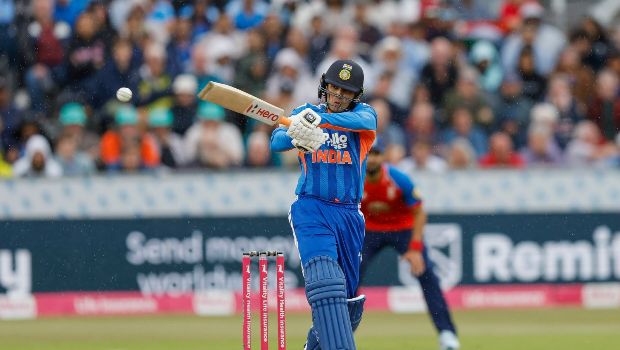
It never ceases to amaze me how much criticism Abhishek Sharma attracts from Indian cricket fans.
The clamour to include Vaibhav Sooryavanshi in India’s T20I side is completely understandable. After the sensational form he displayed in the IPL, there is every reason for fans to be excited about what he could bring to the national team. But somewhere along the way, the conversation has shifted from wanting Vaibhav in the XI to demanding that Abhishek be dropped. That feels both unfair and unnecessary.
Spend a few minutes scrolling through social media or the comments section on YouTube, and you’ll find Abhishek described as everything from a “slogger” and a “flat-track bully” to far less flattering terms. It is remarkable how quickly people seem to forget what he has done over the last two years.
Let’s start with the obvious: performances.
Three of Abhishek’s last four innings for India have produced scores of 52, 49 and 59. Those are hardly the numbers of a batter struggling to justify his place. Go back to 2025, and the numbers become even more impressive. He amassed 859 runs in international T20 cricket at an astonishing strike-rate of 193, and until July 1 spent 11 months as the world’s top-ranked T20I batter.
Those achievements didn’t happen by accident.
Following India’s triumph at the 2024 T20 World Cup, the team made a conscious decision to evolve further as a batting unit. The emphasis shifted towards an ultra-aggressive brand of cricket built around calculated risk. Rather than preserving wickets for the closing overs, India’s batters were encouraged to attack from the very first ball.
Few players embodied that philosophy better than Abhishek.
He isn’t batting for personal milestones. He isn’t worried about finishing unbeaten or protecting his average. If the first delivery of the innings is there to be hit, Abhishek is going to swing. That approach naturally increases the chances of failure. When you play with that level of intent, you are going to produce more low scores than conventional openers.
But that is precisely the trade-off India has accepted.

The management understands that an explosive start can decide T20 matches long before the final overs. Abhishek’s role is to maximise those opportunities, even if it means sacrificing personal consistency.
Yes, this year’s T20 World Cup began in disappointing fashion for him, with three ducks in succession. For many critics, that was all the evidence they needed.
What they conveniently ignore is how he responded.
In the World Cup final, he smashed the fastest half-century of the tournament to help India lift the trophy. He followed that with a blistering 49 off just 20 balls against Ireland before producing another explosive innings—59 from only 24 deliveries—against England.
His IPL campaign was equally impressive. Abhishek piled up 563 runs at a strike-rate of 204, while his tally of 43 sixes was surpassed only by Sooryavanshi.
That hardly sounds like a batter whose place in the side should be under threat.
It is perfectly reasonable to be excited about Vaibhav’s emergence. Healthy competition is exactly what Indian cricket needs. But appreciation for one player shouldn’t come at the expense of another who has consistently delivered while fulfilling one of the toughest roles in T20 cricket.
Before writing off Abhishek, it is worth understanding the tactical shift India has made in the shortest format. Judge him by the role he has been asked to perform, not by outdated expectations of how an opener should bat.
If you do that, you’ll realise that Abhishek has been one of the biggest reasons behind India’s transformation into one of the most feared T20 teams in world cricket.