


























With the Women’s T20 World Cup in England fast approaching, there are, as is often the case in the women’s game, a handful of teams that stand out as genuine contenders for the title. While several sides will fancy their chances of making an impact, the tournament appears to revolve around four or five teams that possess the quality, depth and match winning ability required to go all the way.
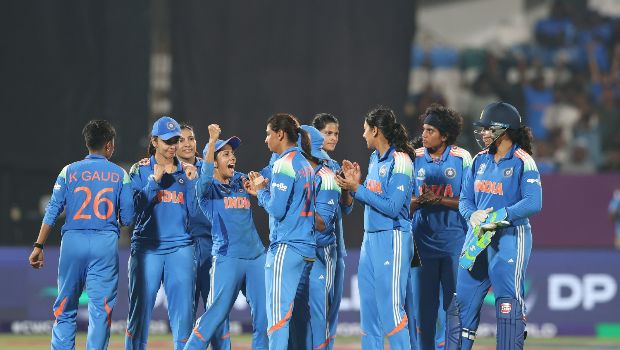
India are undoubtedly among those leading contenders. They arrive at the tournament buoyed by their recent success in the 50-over World Cup and have also benefited from valuable experience of playing in the United Kingdom over the past year. Their recent T20 series in England, which they lost 2-1, provided another important opportunity to adapt to local conditions ahead of the World Cup.
India possess a very strong squad filled with match-winners across departments. A significant factor behind their progress has been the work of head coach Amol Muzumdar, who has done a terrific job since taking charge. Having been given considerable freedom by the BCCI, he has helped shape a side that looks capable of competing with the very best teams in the world.
The biggest challenge for India, however, may lie in finding the right balance in their bowling attack. Their spin resources are particularly impressive, led by Deepti Sharma and Shree Charani. There is also a strong case for Shreyanka Patil to feature more prominently. During the recent series against England, India appeared to be alternating between different combinations involving Kranti Gaud and Nandani Sharma, but there is a compelling argument for fully embracing their spin strength.
If it were my decision, I would pack the side with as many quality spinners as possible. India have the personnel to make that strategy work, and the composition of their bowling attack could ultimately determine how far they go in the tournament.
The batting unit is equally formidable. Jemimah Rodrigues, in particular, should play a key role and, in my view, must bat in the top four. At times, India’s deep batting line-up has seen her pushed down to number five, but she is too influential a player to be kept away from the top order. The earlier she bats, the greater her impact can be.
Alongside her, Smriti Mandhana, Shafali Verma and Harmanpreet Kaur form a powerful core, while Yastika Bhatia adds further quality. India also bat deep, with Deepti Sharma and Richa Ghosh capable of providing valuable runs in the latter stages of an innings. There is no shortage of batting talent, and there is certainly enough quality in this squad to win the World Cup. The key question remains whether they can settle on the ideal bowling combination.
If India are among the favourites, Australia remain the benchmark. For me, Australia are the most likely team to lift the trophy and would start the tournament as the number one favourites.
The depth of talent available to Australia is extraordinary. They possess match-winners in every department and have the luxury of fielding players of exceptional quality throughout their line-up. The possibility of someone like Tahlia McGrath batting as low as number seven underlines the strength of their resources.
Their spin options are outstanding, with Ash Gardner and Alana King providing quality and control, while Ellyse Perry continues to be a vital presence. At the top of the order, Beth Mooney remains one of the most reliable batters in the world, while Annabel Sutherland plays a hugely important role in balancing the side.
What makes Australia so dangerous is their relentless depth. They keep coming at opponents with quality players and genuine match-winners. One player to keep an eye on is Lucy Hamilton. She may not yet be a household name, but she has the potential to make a significant impact during the tournament.
Australia also possess quality pace bowling through Megan Schutt and others, giving them a well-rounded attack capable of thriving in English conditions. More importantly, they understand how to win major tournaments. That experience and winning culture make them incredibly difficult to beat when the stakes are highest.
While Alyssa Healy’s absence is notable, Australia have enough quality throughout their squad to absorb that loss without it significantly affecting their chances.

England, meanwhile, will draw confidence from their recent T20 series victory over India, particularly the momentum gained from winning the final match. However, unlike Australia, England enter the tournament with a few unanswered questions regarding their batting line-up.
The uncertainty centres largely around the top order. Nat Sciver-Brunt’s return has created additional selection decisions, while Amy Jones’ role remains unclear. She has been used as an opener, at number three and even lower down the order, suggesting that England are still searching for their best combination.
Alice Capsey is another player whose position remains open to debate. For me, she simply has to play, and I would prefer to see her open alongside Danni Wyatt-Hodge. England may ultimately choose to open with Amy Jones, which is a perfectly reasonable option, but it would not be my preferred approach.
The constant tinkering gives the impression that England are not entirely certain about their strongest batting order. As tournaments progress into the knockout stages, that lack of clarity can become a concern.
Where England look particularly strong is with the ball. Their bowling attack appears settled, balanced and highly effective. The spin trio of Linsey Smith, Charlie Dean and Sophie Ecclestone has performed consistently, while Lauren Bell has been outstanding. England also benefit from the all-round options provided by Freya Kemp and Dani Gibson.
The bowling unit looks well established and in excellent order. It is the batting line-up, rather than the attack, that raises the biggest questions heading into the competition.
Beyond the three leading contenders, South Africa cannot be ignored. Players such as Laura Wolvaardt and Marizanne Kapp provide genuine world-class quality, and the team has made enormous strides in the global game over the last four or five years.
South Africa are now legitimate contenders and have developed into one of the strongest teams in women’s cricket. They possess a slight advantage over many rivals when it comes to squad depth and have steadily transformed themselves into a side capable of challenging for major trophies.
The West Indies are another team worth watching closely. Having seen them in action in the UK last summer, one thing remains clear: Hayley Matthews is arguably still the most talented women’s cricketer in the world.
If Matthews produces an outstanding tournament, the West Indies could become a dangerous outsider capable of upsetting more fancied opponents. The challenge, however, is that they do not possess the same overall depth as teams such as India or Australia. Over the course of a long tournament, that lack of depth could prove decisive.
Still, T20 cricket is a format where individual brilliance can change everything. One player enjoying a remarkable run of form can transform a team’s fortunes, and that gives the West Indies an opportunity to surprise people.
New Zealand are another side that deserve respect. Sophie Devine has been in excellent form and they recently played a series against England. They undoubtedly have match winners within their ranks and should be competitive throughout the group stage.