

























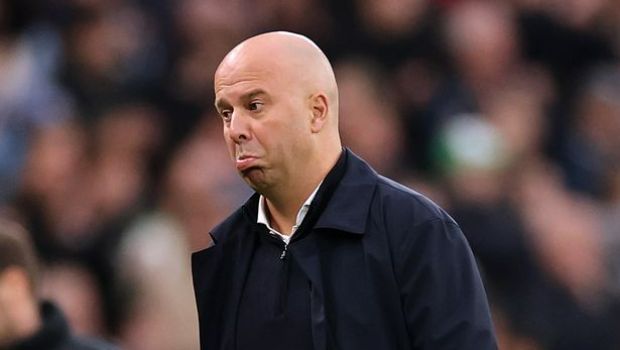
At first glance, this season feels like a step backward for Liverpool FC. No trophies, early exits in key competitions, and a failed Premier League title defense. For a club that had just reached the top, that combination usually triggers drastic decisions.
But this time, something different is happening.
Despite the scrutiny around Arne Slot, the club’s leadership has resisted the impulse to make a change. And if you look beyond the surface, there’s a case to be made that Slot’s season might quietly compare—statistically, at least—more favorably than what Jürgen Klopp delivered after his own title-winning campaign.
That doesn’t mean expectations have been met. It means the evaluation might be more nuanced than it appears.
Replacing a title-winning season is one of the most complex challenges in football. The emotional drop, physical fatigue, and tactical adjustments from opponents tend to converge all at once.
Liverpool are experiencing that convergence.
The squad went through a significant rebuild, with transfer spending exceeding $500 million. On paper, that level of investment should accelerate performance. In practice, it introduced new variables—adaptation periods, injuries, and disrupted chemistry.
Several key players missed extended time.
Alexander Isak was sidelined for months, Jeremie Frimpong struggled with recurring muscle issues, and Hugo Ekitike is facing a long-term recovery timeline. Even players who remained available needed time to adjust to the pace and physicality of the Premier League.
Those factors don’t excuse results, but they help explain inconsistency.
There’s also the emotional dimension.
The loss of Diogo Jota had an impact that goes beyond tactics or squad depth. Moments like that affect focus, cohesion, and performance in ways that are difficult to measure but impossible to ignore.
Against that backdrop, Liverpool’s position in the table becomes more complex to interpret. They are not competing for the title, but they are still within reach of Champions League qualification—something that looked uncertain at various points.

This is where the conversation shifts.
After winning the Premier League with 99 points, Klopp’s Liverpool returned the following season and finished with 69 points. It was a sharp drop, influenced by injuries and squad limitations.
Slot’s team, despite its struggles, has a chance to surpass that total.
If they win their remaining matches, they could reach 70 points. It’s a small numerical difference, but it matters in context. It suggests that, despite the narrative of decline, the team’s overall output is not dramatically worse than a previous post-title season under a highly respected manager.
At the same stage of the campaign, the comparison becomes even tighter.
Liverpool currently have more points than Klopp’s side did after the same number of games in that title defense season. That detail doesn’t change the emotional perception of the campaign, but it adds a layer of perspective for decision-makers.
For the club’s leadership, including figures like Michael Edwards, these comparisons are not abstract—they are part of how performance is assessed internally.
It’s not just about trophies. It’s about trajectory.
Across the Premier League, managerial changes have become almost routine.
Tottenham Hotspur, Chelsea FC, and Manchester United have all cycled through coaches this season, often in response to short-term results.
Liverpool have taken a different route.
Slot’s first season brought immediate success, which created a buffer. More importantly, the club seems to recognize that the current campaign has been shaped by a combination of factors rather than a single failure point.