

























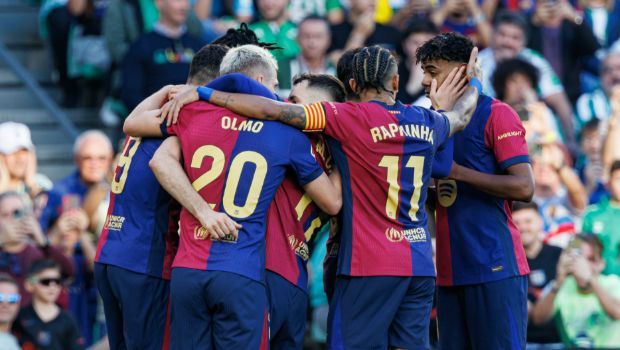
What began as a short-term solution has turned into a long-term decision. After a standout campaign in Spain, Marcus Rashford’s loan spell is set to become permanent as Barcelona move to activate the $26 million purchase clause agreed with Manchester United.
Inside the Catalan club, the consensus is firm. The coaching staff and sporting leadership believe it would be far more expensive—and far riskier—to replace the output Rashford has delivered than to complete the deal already on the table. The only scenario that would slow the process is a serious late injury. Short of that, the paperwork is expected to follow the performances.
The timing is notable. At Old Trafford, the interim manager has publicly said he would welcome Rashford back if handed the job on a permanent basis. In practice, that sentiment now looks overtaken by events in Barcelona.
Rashford’s season has been measured not just in goals and assists, but in fit. He has adapted quickly to Barcelona’s positional play, pressing demands, and attacking rotations. The numbers—10 goals and 13 assists—tell part of the story. The rest is in how he stretches defenses, links phases, and sustains tempo in games where space is scarce.
Within the club hierarchy, the argument is simple: finding a forward with comparable production for $26 million in today’s market is unrealistic. Even rotation-level attackers with proven output often command fees north of $40-50 million, before wages and agent costs are considered.
Head coach Hansi Flick has repeatedly emphasized attitude and tactical discipline as non-negotiables. Rashford has met both standards. Sporting director Deco has focused on squad value: age profile, versatility, and resale logic. On those criteria, the deal makes financial sense despite the club’s well-known constraints.

There is also a wage component. Rashford is understood to be willing to realign his salary to Barcelona’s structure, a key factor in allowing the move to proceed without destabilizing the payroll.
Most importantly, Barcelona are buying certainty. They know what they are getting because they have already seen it across a full season.
Rashford’s exit from Manchester United followed a period where he struggled for continuity and confidence. In Spain, he has rebuilt both. The tactical clarity at FC Barcelona—when to press, where to receive, how to attack the half-spaces—has simplified his game and amplified his strengths.
He has also been explicit about how he feels. Playing for Barcelona, he has said, is an honor and a moment he wants to seize.