

























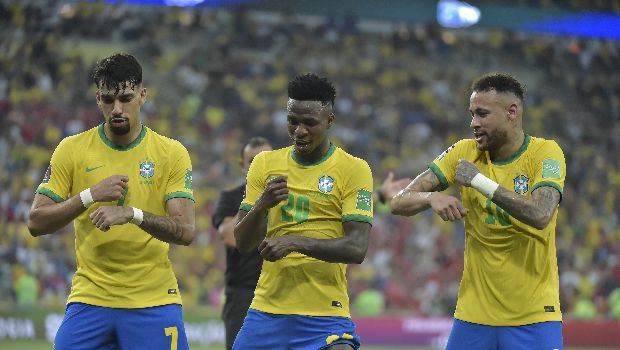
The World Cup has delivered another major refereeing controversy, and this time the Brazilian Football Confederation (CBF) is refusing to stay quiet.
Following Brazil’s victory over Scotland, officials from the CBF formally expressed their concerns to FIFA regarding what they describe as inconsistent use of VAR during the tournament. The complaint centers on a disallowed goal scored by Vinicius Junior, a decision that Brazilian authorities believe contradicts the standards applied in other matches.
What has intensified the debate is a similar incident involving Argentina earlier in the competition, where a comparable situation did not trigger intervention from the video officials.
For Brazil, the issue is no longer about a single decision.
It is about ensuring that every team competes under the same interpretation of the rules.
Brazil comfortably defeated Scotland in Miami, but one moment during the first half overshadowed much of the post-match discussion.
After opening the scoring, Vinicius Junior appeared to double the advantage with another well-taken goal. The celebrations, however, were short-lived. A VAR review determined that a foul had occurred during the buildup, leading to the goal being overturned.
The decision immediately generated confusion.
Brazilian players questioned the intervention, while Scottish footballers reportedly seemed surprised that the review had even taken place. That reaction became one of the central arguments later presented by the CBF in its official communication with FIFA.
Brazil’s football authorities believe the tournament has generally followed a philosophy that prioritizes the judgment of on-field referees, limiting VAR involvement to obvious mistakes rather than subjective interpretations.
According to their position, the incident against Scotland did not fit within that framework.
Instead of challenging the specific result, the CBF argues that similar situations must receive identical treatment regardless of which teams are involved.

That principle, they insist, is essential for preserving trust in the competition.
The controversy gained another layer because of an incident involving Argentina earlier in the tournament.
Brazilian officials referenced a goal involving Lionel Messi during Argentina’s group-stage encounter against Algeria, pointing to what they considered a comparable sequence of play. In that case, VAR did not intervene, and the goal stood.
The comparison has naturally fueled discussions among supporters and analysts.
Football fans understand that no two incidents are perfectly identical, but governing bodies are expected to apply consistent standards when evaluating similar actions. When different outcomes emerge from seemingly related scenarios, questions inevitably follow.
The CBF’s letter emphasized exactly that concern.
Rather than demanding retrospective changes, Brazil’s football leadership called for greater transparency regarding the criteria used by VAR officials throughout the World Cup. The federation argued that predictable and uniform application benefits the integrity of the competition and protects the authority of referees on the field.
The controversy also extended beyond the video review itself.
Brazilian representatives reportedly questioned FIFA’s decision to appoint Mexican referee Cesar Arturo Ramos for the match, citing previous disputes involving the official during other international tournaments.
Those historical grievances have added further tension to an already heated debate about officiating standards.