
























Football history isn’t kind to whoever comes next. Ask David Moyes, who lasted barely ten months trying to fill Sir Alex Ferguson’s chair at Manchester United. Ask Unai Emery, who inherited Arsenal from Arsène Wenger and spent his tenure fighting comparisons he could never quite win. Some managers don’t just leave a club successful — they leave it defined by them, and whoever follows inherits both the trophy cabinet and the shadow. Fans forgive a lot of things, but they rarely forgive feeling like the magic walked out the door with the man who built it.
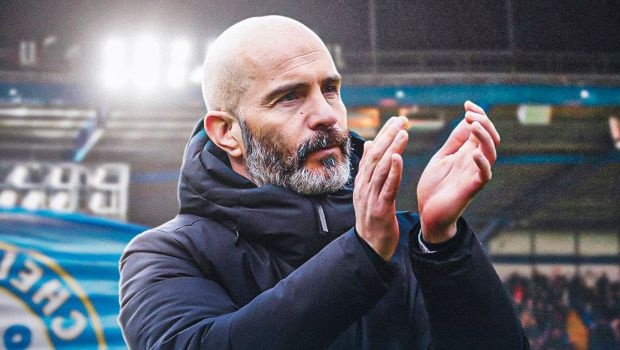
That’s the exact position Enzo Maresca now finds himself in at the Etihad. Pep Guardiola didn’t just win — he rewired what English football expected a dominant team to look like, racking up roughly twenty trophies across a decade in charge. Replacing that isn’t a coaching job so much as an inheritance, and Maresca knows it.
What makes these transitions so brutal usually has nothing to do with the incoming manager’s ability. Moyes wasn’t a bad coach — he simply walked into a squad and a culture built entirely around one man’s methods, and United still haven’t lifted a Premier League or Champions League trophy since Ferguson walked away. Arsenal’s post-Wenger years told a similar story: talented managers cycling through, unable to reset expectations that had calcified around one era.
Maresca has been open about drawing that exact parallel. He’s called the challenge a privilege, but also pointed out that clubs which try to build an entire identity around one long-serving manager tend to stumble once that manager is gone — United being the obvious case study.
Where he differs from Moyes, though, is in what he’s inheriting structurally. City haven’t burned through managers the way most modern clubs do — Maresca is only the club’s third permanent boss in roughly seventeen years, a stability most Premier League sides can’t claim. That, in his view, is the safety net United never had: a football operation built to outlast any single name on the touchline, Guardiola included.

Stability isn’t just about the dugout, either. Every super-club deals with speculation over its best players, and City are no exception right now with Rodri — the reigning Ballon d’Or winner — being tied to a possible Real Madrid switch just as he heads into minor back surgery.
Maresca’s response has been notably unbothered. “Around big players there is always speculation,” he said, brushing off the noise as simply part of managing elite talent rather than a genuine distraction. His priority, by his own account, is straightforward: get Rodri healthy, get him rested, and get him back on the pitch — the transfer chatter can wait.
That composure might end up being Maresca’s biggest asset. The managers who’ve struggled most after a legendary predecessor often crumble under pressure to prove themselves immediately, chasing quick fixes instead of trusting the framework already in place. Maresca seems to be betting on the opposite approach — leaning on City’s institutional consistency rather than trying to out-Pep Pep.