

























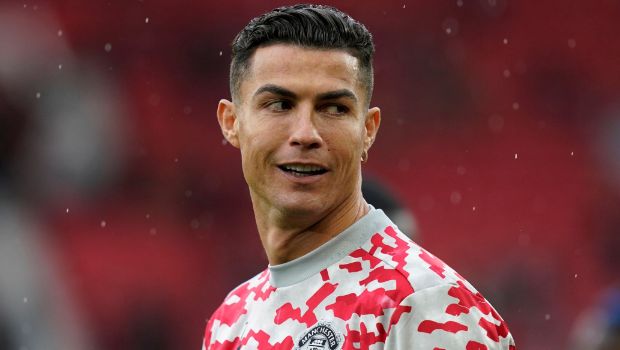
When Cristiano Ronaldo arrived in Saudi Arabia, the league instantly revolved around him. Every campaign, commercial, and global headline positioned him as the face of a new football era in the Middle East. The assumption was simple: Ronaldo would dominate both on the pitch and in the narrative surrounding the Saudi Pro League.
But football changes quickly.
Little by little, Ronaldo’s image as the undisputed centerpiece of the league is beginning to fade. The clearest sign yet came with the announcement of the Player of the Season award, where the Portuguese icon was beaten by Joao Felix—a player many had previously labeled a disappointment after difficult spells in Europe, particularly at Chelsea.
The result was surprising not just because Ronaldo lost, but because of what it symbolized about the evolution of the Saudi league itself.
For years, Félix carried the reputation of unrealized potential.
Massive transfer fees, flashes of brilliance, and inconsistent performances followed him through Europe. His move to Chelsea failed to stabilize his career, and many believed his best years might already be behind him before arriving in Saudi Arabia.
Instead, he reinvented himself.
This season, Félix became one of the league’s most complete attacking players, combining creativity and efficiency in a way few expected. His statistical output was impressive, but more importantly, he consistently influenced matches beyond scoring alone.
While Ronaldo finished among the top scorers again, Félix offered a more balanced profile. Goals, assists, playmaking, and overall involvement in the team’s attacking structure pushed him ahead in the final voting.
The award itself carried credibility because it was decided through a broad voting process involving captains, coaches, journalists, and supporters. This was not simply a popularity contest or marketing exercise. The people inside the league genuinely viewed Félix as the most influential player over the course of the season.

That matters, especially because Ronaldo’s presence previously felt untouchable in Saudi football circles. Losing this kind of recognition suggests the league is beginning to move past relying entirely on his image.
To be clear, Ronaldo did not have a bad season. Far from it.
Even at 41 years old, he remained one of the league’s leading scorers and continued producing decisive moments for Al-Nassr. Most players in football history would gladly accept the type of production he still delivers regularly.
The issue is that expectations surrounding Ronaldo have never been normal.
Because of his reputation, people measure him differently. Simply scoring goals is no longer enough to dominate the narrative. Trophies, awards, and influence over the league’s identity are what define success at this stage of his career.
That’s where the cracks are beginning to show.
Ronaldo failed to win any Player of the Month awards this season, something that would have seemed impossible when he first arrived. Multiple other stars across the league—including Félix—received recognition ahead of him during key stretches of the campaign.
Even more damaging is the broader competitive landscape. The Saudi league no longer feels like Ronaldo’s personal showcase. New stars are arriving constantly, younger players are adapting faster, and tactical quality across several clubs has improved dramatically.
Players like Ivan Toney, Julian Quinones, and Ruben Neves all produced elite-level seasons, making the competition far less centered around one individual.