























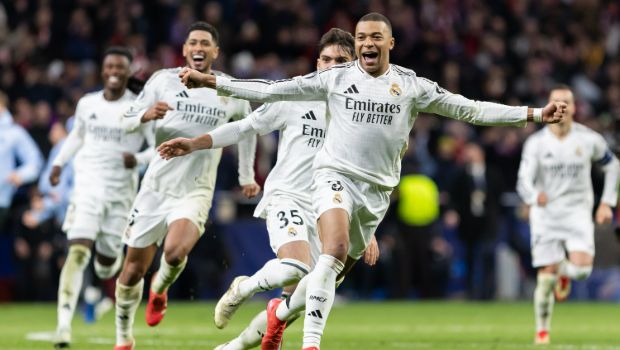
Few clubs operate under the constant pressure of winning like Real Madrid. But this season has exposed something deeper than poor results. Behind the scenes, the club is dealing with a fractured locker room, unclear leadership, and instability at the managerial level. The result is a campaign drifting toward a trophyless finish—an outcome that rarely goes unnoticed at the Bernabéu.
What makes the situation more complex is that the club already tried to reset things earlier in the season. The appointment of Xabi Alonso was supposed to mark a new phase, but that experiment collapsed faster than expected. Now, voices from within the club’s history—most notably Iker Casillas—are suggesting that the solution might be to revisit what was abandoned.
The core issue inside Madrid right now isn’t tactical—it’s structural. Reports of tension between players have moved beyond speculation, with incidents escalating to the point of financial penalties. Two key midfielders were reportedly fined more than $1 million USD after an altercation, highlighting how fragile the internal environment has become.
In a club where hierarchy typically defines behavior, the absence of a strong central voice is noticeable. Veteran leadership appears diluted, and newer figures haven’t fully assumed control. That vacuum has created a setting where disagreements spill over, and collective focus suffers.
The situation becomes even more problematic when combined with inconsistency on the pitch. Performances have lacked cohesion, and the team often looks disconnected between lines. These are not just technical flaws—they are symptoms of a group that isn’t aligned.
Attempts to stabilize things after Alonso’s departure haven’t delivered clarity either. Interim solutions have come and gone, but none have managed to impose a clear identity or regain control of the squad. At this stage of the season, Madrid finds itself navigating uncertainty.
When Alonso arrived, expectations were shaped by his success in Germany and his understanding of Madrid’s culture. The assumption was that he would bring a structured, modern approach while maintaining the club’s competitive DNA. In reality, he never had the space to fully implement his ideas.

From early on, there were signs of friction. His tactical approach reportedly clashed with key figures in the squad, including Kylian Mbappe. At the same time, differences with club president Florentino Perez created an additional layer of tension.
Despite these challenges, Alonso’s record was not poor. He won a significant majority of his matches, but results alone weren’t enough to offset the internal disconnect. Fan frustration grew, the team’s style remained contested, and eventually, the club opted for a change.
That decision now looks less definitive than it did at the time. With the team still struggling and no long-term solution in place, the question is no longer why Alonso left—but whether letting him go was premature.
Casillas’ stance is not based on nostalgia; it reflects a broader concern about direction. From his point of view, Alonso represented a coherent project—something Madrid currently lacks. Bringing him back would not just be about reinstating a coach; it would be about restoring a framework that was interrupted.
Interestingly, Casillas has also dismissed the idea of a return for Jose Mourinho, despite his past success at the club. That position reinforces the idea that Madrid’s next step shouldn’t be about revisiting old formulas, but about committing to a vision that aligns with modern football.