

























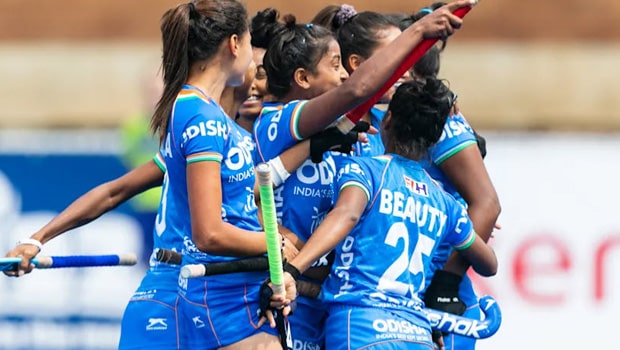
Newly appointed Indian women’s hockey team penalty corner coach Taeke Taekema believes unpredictability will be the biggest weapon in modern hockey as he looks to build a reliable and difficult-to-read penalty corner unit ahead of the 2028 Los Angeles Olympics.
The former Netherlands international, regarded as one of the finest drag flickers in the history of the sport with 221 goals in 242 international appearances, said his ideal penalty corner routine is one that leaves opponents guessing until the very last moment.
“If they’re scared of the direct PC, the variations open up. And if they’re worried about the variations, then the direct shot opens up. In the ideal situation, they never know what’s going to happen,” Taekema said.
Officially appointed as India’s penalty corner coach last month after working with the team for the past year and a half, Taekema believes the side has already made significant progress. He pointed to India’s title-winning campaign at the FIH Nations Cup, where the team also earned promotion to the Pro League while converting penalty corners at an impressive rate.
Despite that success, the 45-year-old insists there is always room for improvement. According to Taekema, penalty corner success is determined as much by decision-making and mental strength as technical ability. He noted that converting one in every three penalty corners is considered an elite standard, making it essential for players to quickly move on from missed opportunities rather than dwell on them.
Taekema acknowledged the pressure that comes with coaching in India, where expectations surrounding the national hockey team are high. He said his message to the players is to focus on executing their roles rather than worrying about the result of every penalty corner.

After spending two-and-a-half years as assistant coach of China’s women’s team, culminating in an Olympic silver medal at the Paris Games, Taekema said he sought a better work-life balance. His specialist role with India allows him to analyse match footage remotely from the Netherlands while travelling for training camps and tournaments.
The Dutch coach also stressed that successful penalty corners depend on the entire execution chain rather than only the drag flicker. Accurate injections, clean stops and precise timing, he said, are the most controllable aspects of the routine and can be refined through marginal improvements.
While modern defenders are better protected and can challenge drag flicks more aggressively, Taekema believes that beating the first runner often creates greater scoring opportunities. He also rejected the notion that women’s drag flicking is less effective than the men’s game, arguing that technique and deception are more important than raw power.
With experienced drag flicker Gurjit Kaur leading the group and several promising players emerging, Taekema believes India possesses the depth needed to become a consistent threat from penalty corners. By the time the Los Angeles Olympics arrive, he hopes India will be recognised not for relying on one specialist but for executing every element of the penalty corner routine with precision and consistency.